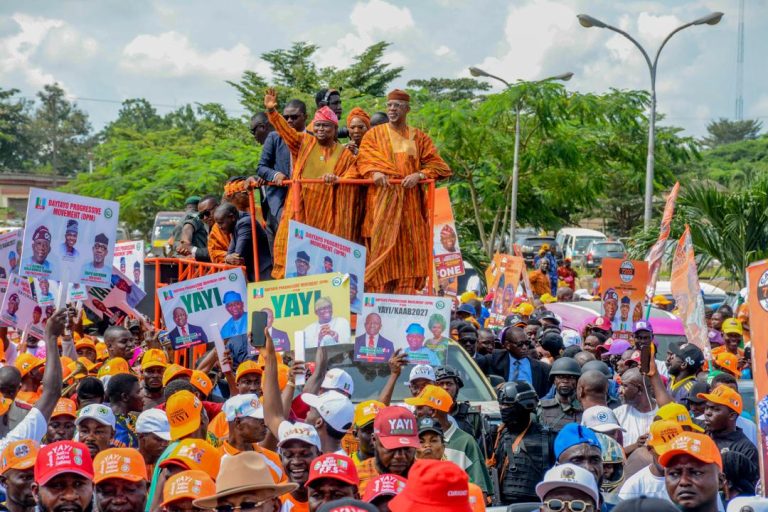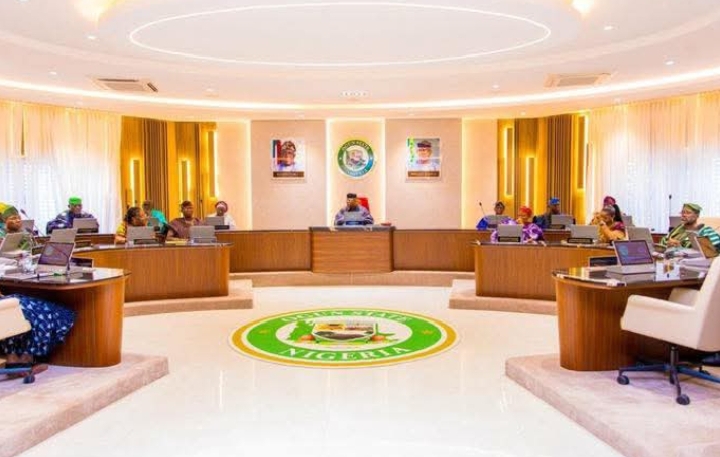

Former member of the Ogun State House of Assembly and incumbent Women Affairs Commissioner in the State, Hon. Adijat Adeleye and Ibrahim Ayokunle Isiaka, a four-term Member of the House of Representatives and incumbent representative of Ifo/Ewekoro Federal Constituency, are squaring up for the ticket of the All Progressives Congress (APC) ahead of the 2027 general elections.
Observers say the race is heating up amid growing calls for fairness between Ifo and Ewekoro Local Government Areas over a disputed power-sharing arrangement. Our correspondent, Biodun Gbenle
reports.
As permutations for the 2027 general elections gather pace across Ogun State, the political atmosphere in Ifo/Ewekoro Federal Constituency is steadily evolving into a contest of ideas, performance, and credibility.
Within these expanding power discourses, a fiery call for fairness and rotation is growing stronger by the day with more and more voices from Ifo Local Government Area, in particular, becoming more assertive in their call for equity. Many argue that the time has come to realign the representation in favour of their axis, citing what they perceive as an imbalance in recent political cycles.
Community leaders and political actors within Ewekoro insist that adherence to the rotation principle is not merely a political convenience, but a moral obligation that reflects fairness, justice, and mutual respect.
Supporters of this position contend that rotational representation fosters a sense of belonging and shared ownership of governance.
By allowing both Ifo and Ewekoro to take turns in producing the Federal lawmaker, they argue, the constituency can better harness the strengths and perspectives of its diverse population. This, in turn, is expected to translate into more inclusive development and a broader distribution of opportunities.
On the other hand, some stakeholders caution against an overly rigid interpretation of rotation, emphasising the need to balance fairness with competence. They argue that while zoning and rotation can promote inclusivity, they should not override the fundamental requirement of electing capable individuals who can effectively represent the constituency at the National Assembly.
For this group, the ideal approach is one that harmonises equity with merit—ensuring that the candidate from any bloc is not only eligible by rotation but also qualified by experience and vision
A cursory look at the current arrangement reveals that the incumbent,
Hon. Ibrahim Ayokunle Isiaka, who is from Ewekoro LGA, is currently in his third term in the House of Representatives. He was elected for a first term in 2015 in the 8th Assembly. Isiaka was re-elected in 2019 for the 9th Assembly, and in 2023 for the 10th Assembly.
He currently serves as the Deputy Chief Whip of the 10th House of Representatives. He is a ranking member who previously served as Chairman of the House Committee on National Planning and Economic Development. His decision to seek a fourth term is the crux of the matter as many stakeholders argue that it should now be the turn of Ifo LGA to send someone to the House of Representative in the spirit of equity, fairness and justice.
Within this emerging discourse, a growing number of stakeholders are making a case for a new face to represent the constituency at the House of Representatives—one they believe embodies both experience and grassroots connection.
At the centre of this conversation is Adijat Adeleye. Adeleye, currently serving as a Commissioner in Ogun State and a former member of the Ogun State House of Assembly, is no stranger to legislative responsibilities or public administration. Her supporters argue that her blend of executive and legislative experience places her in a strong position to deliver effective representation at the federal level.
Having operated within government structures,e they say, she understands not only how policies are made, but also how they can be translated into tangible benefits for constituents.
On the other side is the incumbent representative, Ibrahim Ayokunle Isiaka, who has lately come under increasing scrutiny from sections of the electorate. While acknowledged for his presence and contributions in certain areas, critics contend that the pace and scale of development in Ifo/Ewekoro have not met rising expectations.
Issues such as infrastructure deficits, youth unemployment, and access to federal opportunities remain recurring concerns among residents.
It is also very important to note that some notable stakeholders and supporters of the incumbent, are urging caution ahead of the primary election. Some stakeholders point out that incumbency brings with it continuity, established networks, and ongoing projects that may require sustained attention. They argue that any decision to replace a sitting representative should be based on a careful assessment of both past performance and future potential.
There are also the call for political sustainance within the political class in the Constituency. Those in this school of thought argue that with Isiaka’s current position as a principal officer of the National Assembly, being the Deputy Chief Whip of the lower House, it will be politically unwise to replace him just yet.
Proponents of this argument say it is more rewarding for the Constituency to return him for another term, thereby ensuring that the position is not lost in a blind frenzy for change. “Who knows what that change will bring?, a prominent leader in the area argued.
But for many political observers, the call for Adeleye’s emergence is rooted in a desire for a more dynamic and responsive style of representation. During her tenure in the state assembly, she was widely regarded as an active participant in legislative debates, with a focus on policies that directly impacted her constituents. This record, her supporters argue, demonstrates a level of commitment and effectiveness that could be scaled up at the National Assembly.
Equally significant is her current role within the state executive council, where she has been involved in policy implementation and governance at a higher level. This exposure, analysts suggest, gives her an added advantage in navigating the complexities of federal representation, particularly in areas such as constituency project facilitation, intergovernmental collaboration, and resource mobilisation. It is this dual experience, legislative and executive, that many believe distinguishes her candidacy.
Beyond her professional credentials, Adeleye’s proponents highlight her strong grassroots appeal. Over the years, she has maintained close ties with communities across Ifo and Ewekoro, engaging with diverse groups including market women, youth organisations, and local leaders. This accessibility, they argue, is critical in a constituency where voters increasingly value representatives who are visible, approachable, and responsive to their needs.
The push for her candidacy also aligns with a broader narrative gaining traction within Ogun politics—the need to expand opportunities for capable women in leadership positions. Supporters view Adeleye not just as a viable candidate, but as a symbol of inclusive governance, capable of inspiring greater participation among women and younger demographics in the political process.
As it is, the momentum behind Adeleye’s possible bid continues to grow, reflecting a constituency that is increasingly engaged and discerning. Voters are paying closer attention to track records, leadership style, and the capacity to deliver measurable results. In this environment, the conversation is less about political loyalty and more about effectiveness and impact.
As the road to 2027 unfolds, Ifo/Ewekoro Federal Constituency finds itself at a familiar crossroads—balancing continuity with change, and expectation with experience. Whether Adijat Adeleye ultimately emerges as the preferred choice will depend on how convincingly she can translate her credentials into a compelling vision for the future.
What remains undeniable is that the electorate is raising the bar.
The demand is no longer just for representation, but for representation that delivers—consistently, inclusively, and strategically. In that regard, the ongoing conversation around Adeleye signals a constituency ready to embrace leadership that reflects both competence and connection to the people.
About The Author