From a humble beginning in Onitsha to business success in Sokoto and nearly nine years at the helm of Kogi State, the life and career of the former governor spanned commerce, politics, public service and family tragedy.
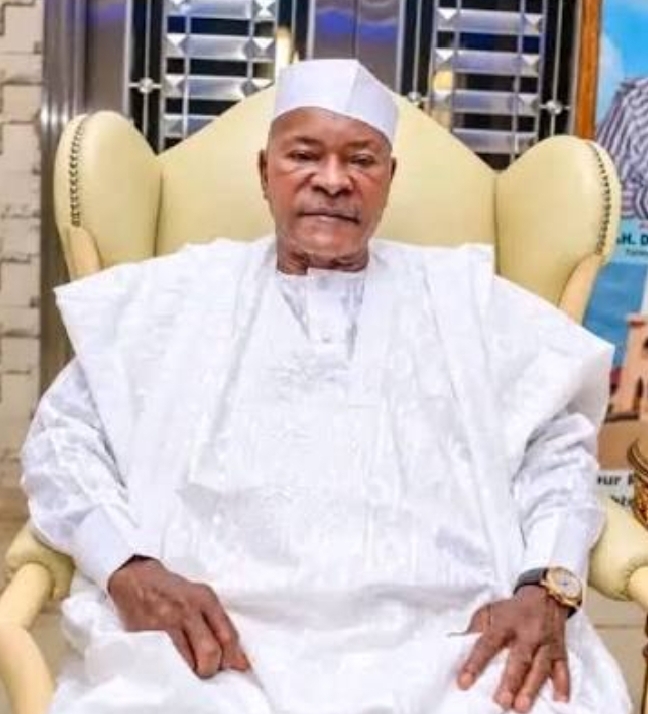
Former Governor of Kogi State, Alhaji Ibrahim Idris, has died in the United Kingdom at the age of 77.
Idris reportedly died on Sunday, September 20, 2026. His death was confirmed to by his nephew, Shehu Ahmed, while details surrounding the circumstances of his death were still being awaited at the time of filing this report.
The development marks the end of the life of one of Kogi State’s prominent political figures of the early years of Nigeria’s Fourth Republic.
Following news of his death, Kogi State Governor Ahmed Usman Ododo, former Governor Yahaya Bello, Commissioner for Local Government and Chieftaincy Affairs Abdullahi Bello and other government officials visited the late former governor’s residence in Abuja to condole with his family.
Born in 1949 in Idah, present-day Kogi State, Ibrahim Idris’ early life was shaped by movement, education, enterprise and commerce.
Available biographical accounts state that he began his primary education in Onitsha, Anambra State, before moving to Kano, where he completed his primary education. He later attended King’s Commercial College in Buguma, Rivers State, and obtained a bachelor’s degree from the University of Abuja.
Long before politics, however, Idris had established himself in business.
He founded the Ibro Trading Company, which developed interests in construction, furniture manufacturing, hospitality and other commercial activities. In Sokoto, where he spent a significant part of his business career, he established a furniture factory and later the Ibro Hotel, which biographical accounts describe as the first three-star hotel in the old Sokoto State.
His years in commerce earned him the name “Ibro”, a name that would remain closely associated with him throughout his political career.
Idris’ transition from business into politics culminated in his emergence as the Peoples Democratic Party’s governorship candidate in Kogi State ahead of the 2003 election.
He defeated the incumbent governor, Prince Abubakar Audu, and was sworn in as governor on May 29, 2003.
His political journey was not without legal controversy.
Idris was returned for a second term in the 2007 governorship election, but the election was subsequently nullified following a legal challenge concerning the exclusion of the All Nigeria Peoples Party candidate, Abubakar Audu, from the election.
The Court of Appeal upheld the decision in February 2008 and ordered a fresh election. Idris subsequently contested the March 2008 re-run and was returned as governor.
He eventually completed his tenure in January 2012 and was succeeded by Captain Idris Wada, who had won the December 2011 governorship election.
In total, Idris spent nearly nine years as Kogi governor, across two periods in office.
Beyond politics, Idris’ family also experienced moments that attracted national attention.
In 2006, three of his daughters survived the ADC Airlines Flight 53 crash, an aviation disaster that claimed numerous lives. Following the survival of his daughters, Idris described the development as a profound act of divine mercy and called for thanksgiving.
Years later, the former governor suffered another devastating family loss.
In April 2024, his son, Mohammed Ibrahim Idris, died in Abuja at the age of 55. Mohammed was a former member of the House of Representatives who represented the Ankpa/Olamaboro/Omala Federal Constituency of Kogi State from 2011 to 2015. The Kogi State Government confirmed his death and described his passing as a tragic loss to the family and the state.
Ibrahim Idris belonged to a generation of Nigerian politicians who emerged into prominence during the early democratic years of the Fourth Republic.
His career combined the worlds of private enterprise and public administration: from building businesses under the Ibro brand to becoming the second elected governor of Kogi State in the Fourth Republic and one of the state’s longest-serving civilian governors.
His administration remains part of Kogi’s political history, while his business career and public profile extended his influence beyond the state.
As tributes and condolences begin to emerge following his death, attention will inevitably turn to the legacy of a man whose journey took him from modest beginnings to the boardroom and eventually to the highest political office in his state.
About The Author